
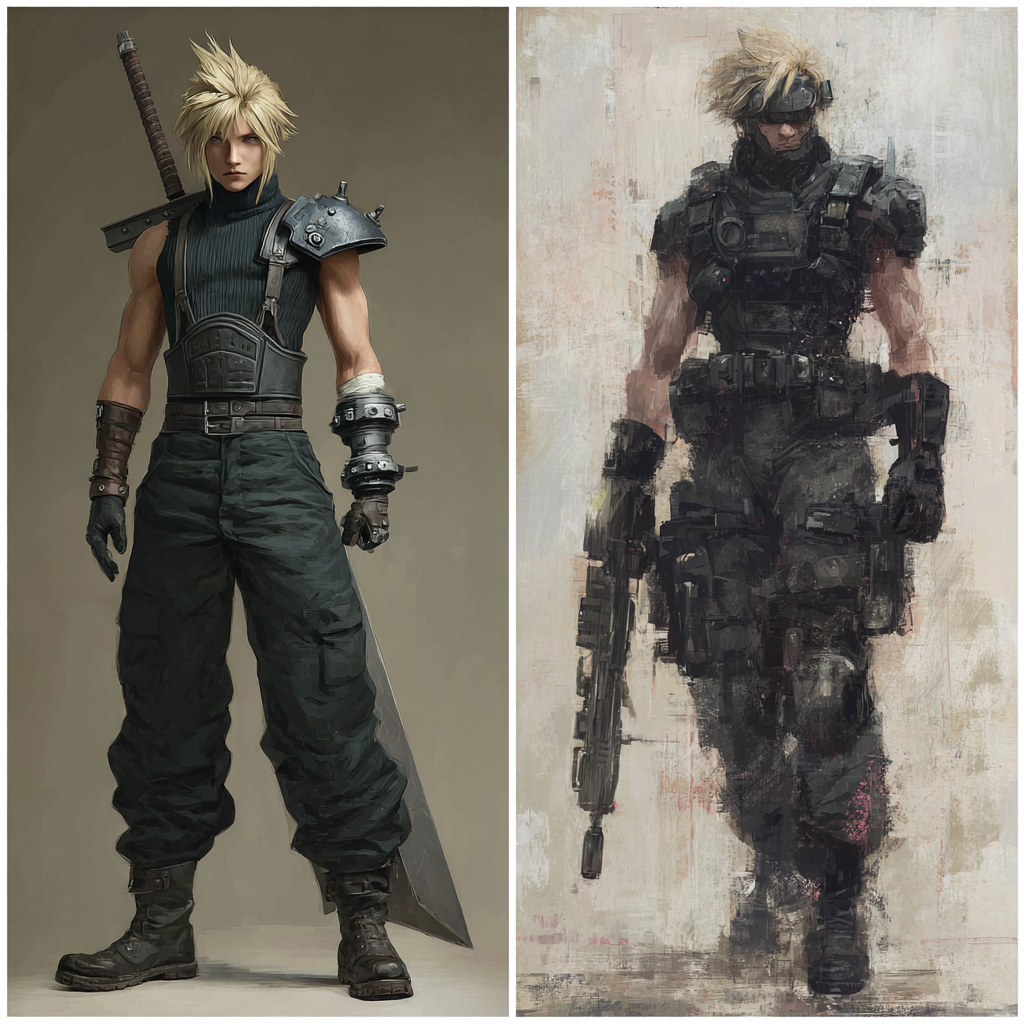
In board games, not every comeback means the same thing. Some titles return because they still work brilliantly and only need to be made legible for a new generation. Others come back because the original idea remains powerful, but the system around it has aged poorly. That is the central difference between a reissue and a redesign. A reissue preserves the game and updates the way it is presented. A redesign keeps the core promise but rebuilds the way the game actually functions.
Publishers often treat these two paths as neighboring options on the same spectrum. In practice, they solve very different problems. A classic game that is hard to read, awkward to handle, or visually locked into an earlier era may need a new visual layer. A classic game that produces repetitive turns, unclear incentives, runaway leaders, excessive downtime, or unresolved balance problems needs more than cosmetic care. It needs structural intervention.
Start with the real reason the game deserves to return
The first question is simple: what exactly made the original game worth bringing back? If the answer is atmosphere, table presence, clarity of identity, or a memorable theme tied to a still-solid ruleset, then reissue is usually the right approach. Many older games have excellent bones but suffer from the production limits of their time. Tiny fonts, muddy iconography, cramped boards, weak component contrast, and rulebooks written for insiders can make a good game feel older than it really is. In these cases, the design does not need to be replaced. It needs to be revealed.
A strong visual reissue does several things at once. It improves usability without flattening personality. It modernizes graphic design while respecting the emotional memory attached to the original. It makes the first play easier without turning the game into something else. Better player aids, clearer icon systems, improved color separation, more readable turn flow, and a refined rulebook can dramatically improve the experience while leaving the underlying decisions intact. This is especially true for classic abstract, family, and mid-weight strategy games whose rules remain elegant but whose physical presentation creates unnecessary friction.
When a new visual layer is enough
The clearest sign that a game only needs a visual update is that experienced players still defend the system itself. They may say the game is brilliant once you get past the rulebook, or that the old edition is ugly but still unmatched. That kind of praise usually points toward preservation, not reinvention. If the game still produces tension, meaningful choices, and satisfying endings, then a redesign may actually damage what made it endure. Not every old interface hides an old structure. Sometimes the structure is timeless.
A well-judged reissue respects this. It does not chase novelty for its own sake. It accepts that the original design already solved the difficult part: giving players a reason to care. What it changes is the surface through which that design is experienced. It removes barriers, not identity. It makes the game easier to teach, easier to parse, and easier to love again.
When nostalgia hides real mechanical problems
There is, however, another category of classic: the game people remember more fondly than they actually enjoy playing today. These are the dangerous ones. Nostalgia can protect a title long after its weak points become obvious. Players may love the concept, the history, or the emotional memory of discovering it, while quietly accepting systems that now feel underdeveloped. This is where redesign becomes necessary.
A full redesign is justified when the original game’s central fantasy remains compelling, but the mechanical delivery no longer supports modern expectations. That does not mean every older game must be sped up, simplified, or made more elegant in a contemporary way. It means the design must be honest about what the table experience now feels like. Are players making interesting decisions, or merely executing procedures? Is conflict meaningful, or is it mostly arbitrary punishment? Does the game reward planning, adaptation, bluffing, tempo, or risk – or only familiarity with its rough edges? If the strongest defense of a classic is “you just have to accept that part,” redesign should be on the table.
A redesign should protect identity, not preserve every rule
Mechanical reconstruction is especially valuable when an older game contains one truly memorable idea surrounded by outdated support systems. Perhaps it has an excellent negotiation core buried under bloated setup. Perhaps it has a brilliant spatial puzzle weakened by random swing. Perhaps its faction asymmetry was visionary for its time, but now produces obvious imbalances. In those cases, preserving every old subsystem in the name of authenticity can become a form of disrespect. It protects the artifact rather than the experience.
The best redesigns identify the non-negotiable heart of the original. That heart may be a rhythm, not a rule. It may be the feeling of territorial pressure, the tension of simultaneous commitment, the paranoia of hidden information, or the delight of building a strange engine from sparse resources. Once that core is identified, the surrounding structure can be rebuilt. Phases may be merged. Scoring may be re-centered. Randomness may be reframed from chaos into uncertainty with mitigation. Interaction may be sharpened so that the same theme generates more deliberate conflict. A good redesign does not ask, “How do we keep the most rules?” It asks, “How do we keep the most identity?”
The main risk of redesign: smoothing away character
That said, redesign carries real risks. It is easy to mistake inconvenience for depth and overcorrect into smoothness. Many classics survive because they contain friction that matters. Uneven tempo, difficult timing windows, and harsh trade-offs can be part of the game’s character. Remove too much, and the redesign may become technically stronger but emotionally flatter. This is why redesign should not begin with modernization as an abstract goal. It should begin with diagnosis. Which parts create productive tension, and which parts create avoidable exhaustion? Which awkward elements are expressive, and which are merely inherited?
Not all friction is a flaw. Some friction creates drama, memory, and consequence. The challenge is to tell the difference between resistance that sharpens the game and resistance that only slows it down.
A practical way to decide: what kind of friction does the game have?
One useful test is to separate obstacles into three groups: aesthetic friction, ergonomic friction, and strategic friction. Aesthetic friction comes from dated art, weak visual hierarchy, or components that fail to communicate tone. Ergonomic friction comes from poor layout, cumbersome upkeep, confusing symbols, and rulebook opacity. Strategic friction comes from the system itself: pacing problems, imbalanced incentives, dead turns, stale openings, or unsatisfying endgame dynamics.
If a classic suffers mainly from the first two, a reissue is often enough. If the third category dominates, redesign is the more honest response. This distinction helps publishers avoid a common mistake: treating structural problems as if they were presentation problems. A cleaner board and better art cannot repair a weak decision space.
The audience test matters too
Another useful test is audience transfer. Can new players appreciate the game once its presentation barriers are removed, or does the design only fully appeal to players already willing to forgive its age? A reissue should expand access without changing evaluation. A redesign aims to change evaluation itself. It is not just trying to help people see the old game more clearly. It is trying to make the game stronger than it used to be.
This is an important difference. One version says, “The game was always good, but the edition was not helping it.” The other says, “The idea was always good, but the game needed to evolve to match it.”
Conservation or rescue?
In the end, the choice between reissue and redesign is a question of respect. Some classics deserve conservation. Others deserve rescue. A new visual layer honors games whose quality was hidden by outdated presentation. A full mechanical reconstruction honors games whose central idea was always bigger than the system that first carried it. The real challenge for publishers is knowing which kind of respect a classic actually needs.